Poetry · c. 1387–1400
The Canterbury Tales
Geoffrey Chaucer
Aya Saleh · Ink & Ivy
Poetry · c. 1387–1400 · English · Medieval
The Canterbury Tales
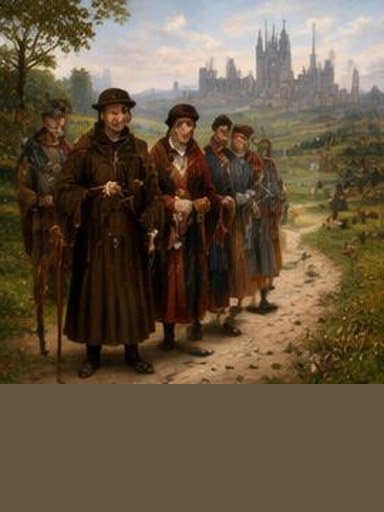
Thirty pilgrims ride to Canterbury and tell tales that give them away.
Reading edition
An authorized English PDF is not yet included for this work. The source links below offer edition searches; access and borrowing availability vary.
How to read it
The birth of English character writing: each tale is a self-portrait its teller does not know they are painting.
Selected section overview
These are selected acts, parts or episodes, not a complete chapter list. Summaries contain spoilers; descriptive headings are editorial.
General PrologueThe company assembles
Portraits sharp enough to convict: the Knight's worn tunic, the Prioress's table manners, the Pardoner's relics.
The Knight's TaleChivalric romance
Two cousins love the same woman; philosophy is deployed to make arbitrary suffering bearable.
The Miller's TaleFabliau riposte
Obscene, perfectly plotted farce that punctures the Knight's idealism in the very next breath.
The Wife of BathPrologue and tale
The longest prologue in the book: experience versus authority, and the first great female voice in English literature arguing her own case.
The Pardoner's TaleDeath under a tree
A corrupt preacher tells a flawless moral fable and then tries to sell the moral. Radix malorum est cupiditas.