Novella · 1945
Novella · 1945 · English · Modern
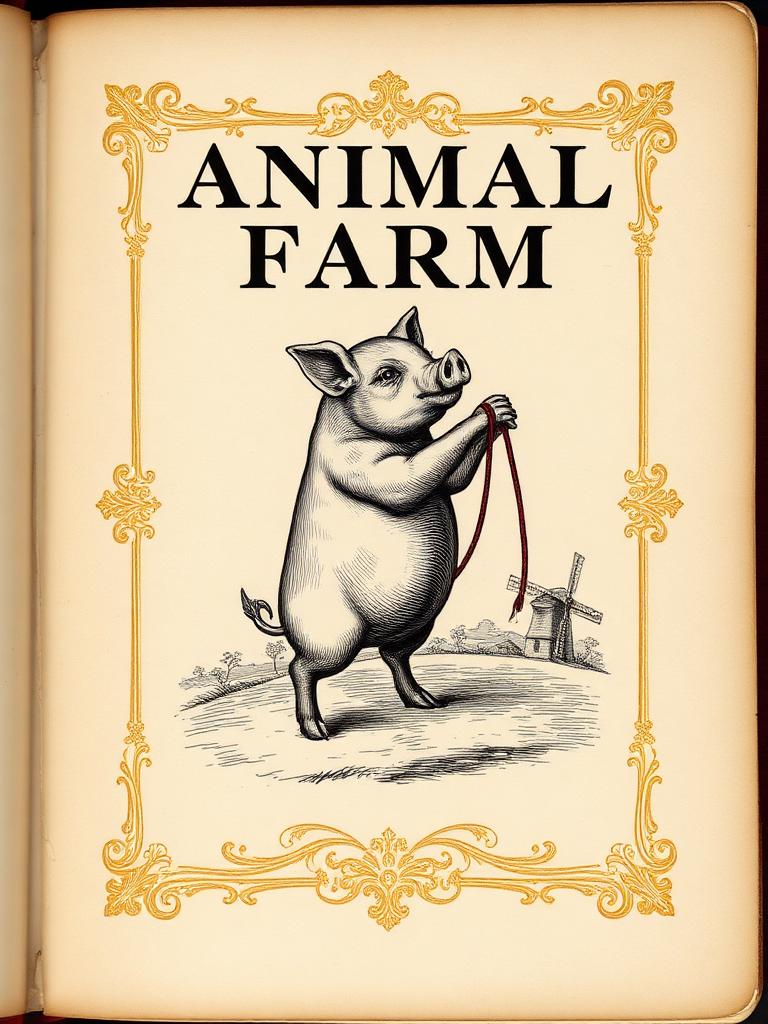
Animal Farm
George Orwell — born Eric Arthur Blair
A beast fable in which the animals of Manor Farm expel their drunken master and build a republic — which curdles, commandment by commandment, into the tyranny it overthrew.
Reading edition
An authorized English PDF is not yet included for this work. The source links below offer edition searches; access and borrowing availability vary.
How to read it
Orwell's subject is not revolution but the corruption of the words that describe it. Every atrocity in the book is preceded by an edit: a commandment quietly amended in the night, a memory adjusted in daylight. The pigs win because they own the only literate mouths on the farm, and Orwell's flat, fairy-tale prose is itself the argument — plain language is the last defence against a plainly told lie.
Selected section overview
These are selected acts, parts or episodes, not a complete chapter list. Summaries contain spoilers; descriptive headings are editorial.
Chapter IOld Major's dream
The prize boar Old Major gathers the animals in the barn and preaches that Man is the sole enemy and all animals are comrades; he teaches them 'Beasts of England'. He dies three nights later, leaving a doctrine without a discipline — the vacuum the pigs will fill.
Chapter IIThe Rebellion
Snowball, Napoleon and Squealer codify Major's dream as Animalism. Neglected and unfed, the animals drive out Jones almost by accident. The Seven Commandments are painted on the barn wall — and the milk disappears the same day. The first theft precedes the first lie.
Chapter IIIHarvest and the missing apples
The harvest succeeds; Boxer's 'I will work harder' becomes the farm's engine. The pigs take apples and milk 'for brain-workers', and Squealer introduces the sentence that governs the rest of the book: do you want Jones back?
Chapter IVThe Battle of the Cowshed
News of the rebellion spreads; Jones and neighbours attack and are routed. Snowball is decorated for bravery. The victory is real — which matters, because later chapters will rewrite it.
Chapter VSnowball expelled
The windmill debate splits the farm. At the vote, Napoleon's nine reared dogs chase Snowball off the land. Napoleon abolishes Sunday meetings, then adopts the windmill plan as his own. The dogs are the argument now.
Chapter VITrade with humans
Sunday work becomes 'voluntary'. The pigs move into the farmhouse and trade with Whymper. The commandment against sleeping in beds acquires two words — 'with sheets' — and the animals doubt their own memories, not the wall.
Chapter VIIThe confessions
Hunger, a collapsed windmill blamed on Snowball, and the first purge: animals confess to invented crimes and are torn apart by the dogs. 'Beasts of England' is banned. Terror is now domestic policy.
Chapter VIIIThe Battle of the Windmill
Napoleon is titled and toasted while Frederick's banknotes prove forged and the windmill is dynamited. A costly slaughter is announced as triumph. The pigs discover whisky; the commandment gains 'to excess'.
Chapter IXBoxer sold to the knacker
Rations fall, the farm becomes a Republic, and Boxer collapses. The van that takes him reads 'Horse Slaughterer'; Squealer explains it away and the pigs buy whisky with the proceeds. The novel's cruellest page, told without raising its voice.
Chapter XFour legs good, two legs better
Years pass; only the pigs prosper. They walk upright, carry whips, and the wall now reads: ALL ANIMALS ARE EQUAL BUT SOME ANIMALS ARE MORE EQUAL THAN OTHERS. At cards with the farmers, the faces blur — the allegory closes its circle.
Where to read & what to read about it
More by George Orwell
Novel · 1949
Nineteen Eighty-Four
George Orwell
Aya Saleh · Ink & Ivy
Nineteen Eighty-Four
1949 · Novel
Memoir · 1938
Homage to Catalonia
George Orwell
Aya Saleh · Ink & Ivy
Homage to Catalonia
1938 · Memoir
Memoir · 1933
Down and Out in Paris and London
George Orwell
Aya Saleh · Ink & Ivy
Down and Out in Paris and London
1933 · Memoir
Essay · 1946
Politics and the English Language
George Orwell
Aya Saleh · Ink & Ivy
Politics and the English Language
1946 · Essay

Novel · 1934
Burmese Days
George Orwell
Aya Saleh · Ink & Ivy
Burmese Days
1934 · Novel